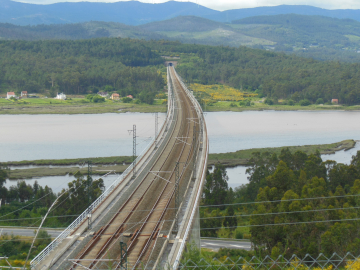
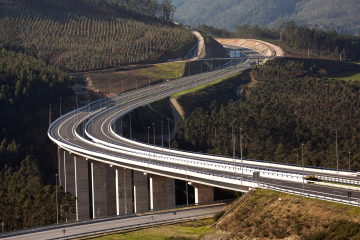
The road infrastructure network in Spain is very extensive and of very high quality in terms of design and execution, but has a very serious maintenance deficit.
Spain.
Mobility and transport in general in Spain face complex financial challenges and the maintenance of infrastructure is a major economic burden, which in view of the situation requires urgent action. It is clear that without urgent investment in the maintenance of Spain's road assets, the assets will lose their value.
If the European approach is followed, the adoption of a vignette system (Switzerland, Austria, Slovenia, Slovakia) or a distance-based payment (Portugal) seems likely. In Spain, in the absence of a universal decision, we believe that the most likely outcome will be to see first how some autonomous communities begin to implement tolls and how this system evolves in the coming months and years. And in our opinion, any system that is not universal will lose much of its fairness and effectiveness.
It is important to note that the technology exists to implement any of the options, so the main issue is to define the model. Technologically, the simplest alternative would be automated pay-per-use with the use of number plate cameras and without barriers or toll booths, so that road users pay according to kilometers travelled and vehicle types as well as congestion pricing strategies, including High-Occupancy Toll (HOT) lanes, where charges for the use of express lanes vary according to the number of people in the vehicle, the time of day and the level of congestion in the lane.
The establishment of "pay-per-use" on roads is a particularly sensitive issue and as such should be approached with maximum transparency in the presentation of the problem and the alternatives for dealing with it. Maximum social consensus should be sought and a universal system should be implemented, otherwise it will lose much of its fairness and effectiveness.
The question of transparency must start with the presentation of the problem, because the basic question to be addressed is not "pay-per-use" yes or no. The reality is that the infrastructure network is not a network of infrastructure.
The reality is that the road infrastructure network in Spain is very extensive and of very high quality in terms of design and execution, and something we should be more proud of, but it has a very serious maintenance deficit. Given that ultimately nothing comes for free, that maintenance will have to be paid for in some way, and that it is already very urgent to undertake major investments in the maintenance of our roads, the question is to reach a political and social consensus on the formula or formulas that will guarantee the necessary investments throughout the life of these assets.
Consequently, either minimum annual allocations are included in the General Budgets of the different Administrations of previously established amounts that would be paid by all citizens equally (according to current tax regulations) or the "Pay per Use" model is introduced, insisting that this decision must be universal, lasting in time and must have a very broad political and social consensus.
The "Mobility Voucher" that we at the Spanish Road Association have developed is a progressive implementation model based on kilometres travelled with a kind of franchise, differentiating by type of vehicle and with adjustments to make it more socially and territorially equitable, which we believe is a good starting point for this much-needed public debate.
As consultancy in the field of traffic and mobility management is one of the main areas of activity of Antea Group Spain and Latin America, we have analysed in depth the issue of financing the maintenance of infrastructures in the attached video: